
My Shoulder Bag

Updated: Jan 11
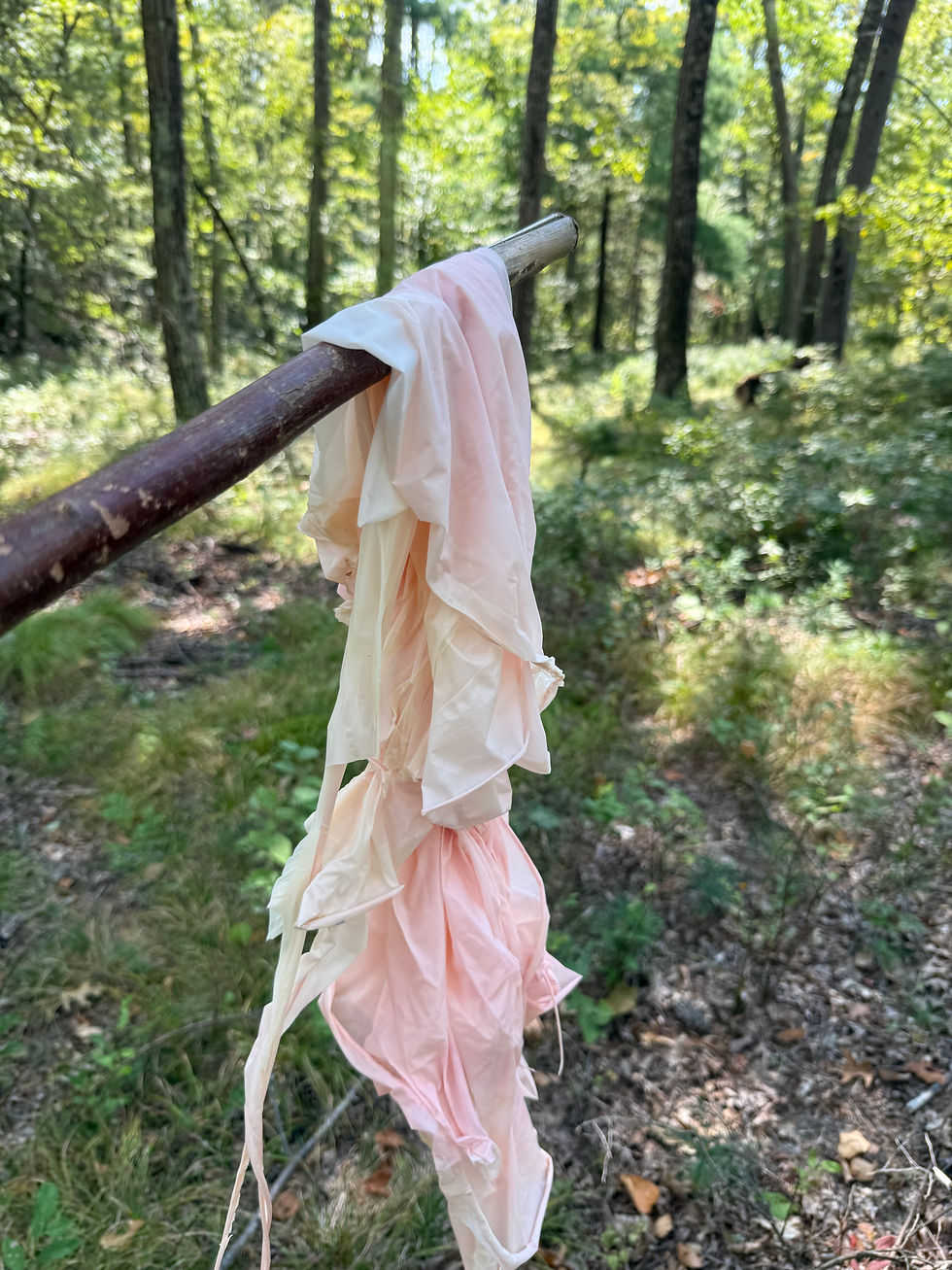
A weather balloon found hanging from a tree in the woods.
My Shoulder Bag
July 8, 2024
I carry a shoulder bag on my walks and hikes and travels. It is a simple bag, one strap
over my shoulder, one pocket with a flap cover. In size, it neatly contains a folded shopping
bag, a small fixed blade sheath knife, a small digging tool, and a length of parachute cord. If I
find an edible mushroom, I may cut it with the knife, put it in the shopping bag, and if it fits,
return it to my shoulder bag. If I wish to gather an edible bulb or tuber, I dig. There are a
zillion things to do with the cord. Other items like water bottles, emergency kit, shelter, fire,
food are carried separately in a small backpack. My shoulder bag is for things that I find.
In the 1950’s my father carried a trout bag with a ventilated bottom to contain, if luck
would have it, a wet trout, and one side pouch that held a small celluloid box of lures, hooks,
and sinkers. I followed suit with a larger canvas bag, but salt water fishing did not make any
steel contents happy, so I switched to a washable nylon mesh bag. I seldom fish now, but I
always carry the bag.
It does not matter what kind of bag you carry. A bag is a container. Like a conversation,
the more important the item it contains, the more valuable it becomes. I spend a lot of time
walking in the woods, either on trails or bushwhacking. I love the feeling of a natural place.
Many times my eye catches an item that is not natural. I am compelled to pick it up and put
it in my bag, take it home, and file it in the appropriate place. My nemesis is the mylar
helium balloon that loses its lift, tangles in the treetops, and finds a resting place on the
forest floor. They can lie for years, never decay, smother native plants, tangle in a wild
animals bowels, and be a pain in my view-shed. I take my knife, slice the mylar balloon to
disgorge any trapped water, wrap it tightly using it’s plastic tail ribbon, and deposit it in my
shoulder bag. It nestles there alongside an empty aluminum can, a glass bottle, whatever else I find. Home, into the recycle or trash, and next time I wander, it is not there.
My local walking places are quite clean now after years of collecting. I have found some
interesting stuff. Bits of antique glass containing manganese turn purple or amethyst in the
sunlight. I found a quart milk bottle a hundred miles north of a dairy in Manhattan, New
York dating back more than a century, a time when there were still dairy farms in the city.
Picking wind-blown trash along a roadway, I have found a five dollar bill, a moss covered
porcelain enameled bed pan, many plastic pint bottles drained of their cheap flavored vodka,
and a neighbor’s tax return.
My shoulder bag has become far more than a container for collectibles. Hiking with
others, I do not have to share words when I bend down to pick up an old tin can and place it
in the bag. The message travels like the concentric rings of a pebble thrown in the water.
One time, walking with others, I pointed out a mylar balloon far off our route of travel. The next time I passed the same trail, the balloon was gone. I later noticed it had been neatly
deposited in a common trash can, apparently by the person to whom I had pointed it out on
that earlier trip. As time went on the trash can became a magnet for woodland junk
deposited by persons other than myself.
Caretaking the thin crust of our Mother the Earth is contagious. It is the birthright of all
species, human included, to live in harmony with all beings. The presence of a foreign object
is a trigger to our inner senses that the object is out of place. However, we have been
conditioned, taught by bad example, to ignore the trigger, and worse yet to contribute to the
garbage that disrupts the natural order. I have learned to sense the trigger and act, in a good
way, to use the tools I have at hand, my shoulder bag, to enact a change. The message of my action is sent in waves felt by others, even if no one is present in the moment to witness the change. But I know, as in this writing, those waves, amplified, will move mountains.
Tom Foote

Comments